Wholesale Buying Guide
Buying Mixed-Condition Pokémon Cards: Is the Lot Worth the Work?
A mostly clean lot can still be a poor purchase. Look at the cards carrying the price, the buyers who accept the wear and the work each copy needs.
September 25, 2026 · 6 min read
Introduction
A Pokémon singles lot can be mostly clean and still be a poor purchase. If the few cards that justify the asking price have creases or heavy surface wear, a large stack of tidy low-value cards does little to repair the buying calculation.
For a reseller, the useful question is whether the specific copies in the lot can become accurately described offers that your customers will buy, at prices that leave enough room for the work involved.
That requires more than an average price per card or a description such as “mostly good condition.”
Start with the cards carrying the purchase
Before valuing the whole lot, identify the cards you are relying on to recover a meaningful part of its cost. Confirm their set, card number, language and printing variant, then examine those exact copies.
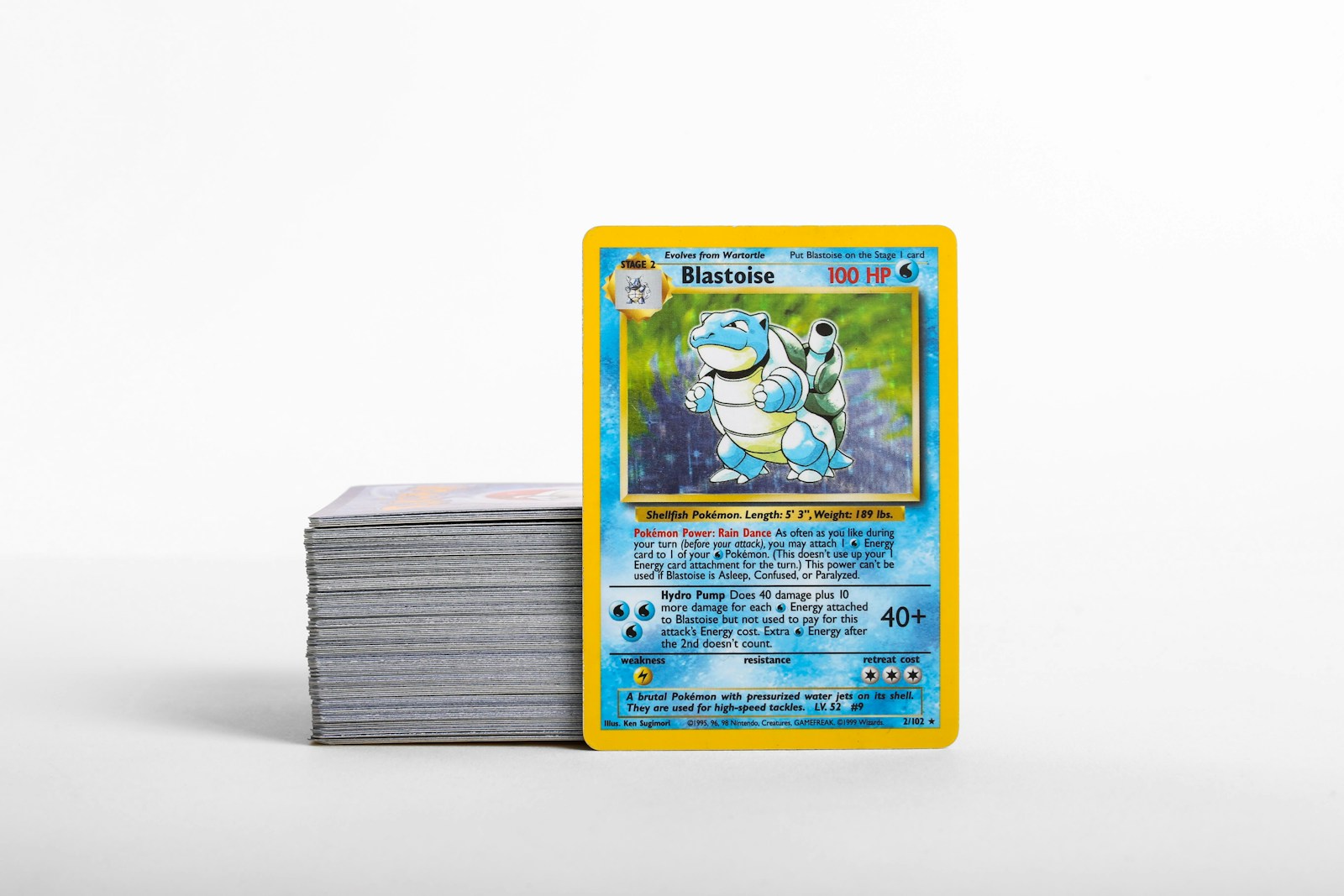
A hypothetical collection might contain a few desirable older holos among hundreds of ordinary cards. If your buying estimate depends on the holos, photographs of a handful of clean commons do not establish the condition of the stock that matters most. Ask for clear fronts, backs and views that reveal the surfaces of the important cards.
Look beyond an attractive front image. Edge whitening, a crease on the back or scratches visible when a holo catches the light can change how you need to describe and price that copy. One photograph may leave those questions unanswered; request another angle when the decision depends on it.
This is not a reason to ignore the rest of the lot. It is a way to direct your first inspection effort. Once the important cards are understood, check whether the remaining assortment has a credible use in your business. A seller-selected sample cannot establish the condition of every unseen card.
If the seller cannot show the cards your estimate depends on, do not fill the gap with the condition you hope to receive. Offer on terms that still make sense with that uncertainty, seek an agreed inspection arrangement, or pass.
Agree on what the condition words mean
“Excellent,” “binder condition” and “light wear” are not sufficiently precise buying agreements by themselves. Ask which standard the seller is using, and connect the description to visible imperfections on the actual cards.
For example, TCGplayer's condition guidance uses Near Mint, Lightly Played, Moderately Played, Heavily Played and Damaged. It assesses the type, number and severity of imperfections. Near Mint can include a few minimal flaws; TCGplayer does not list cards as Mint or Gem Mint.
Use that as a marketplace-specific reference, then follow the current standard for the channel where you will sell. Do not silently turn a supplier's description into a different resale label, or treat a raw-card condition label as a promised grading result.
For a disputed or borderline copy, keep the discussion concrete: show the scratch, whitening or crease and decide how that affects your offer. Arguing over a single adjective is less useful than establishing what the buyer will actually receive.
Worn cards need a buyer who accepts the wear
Condition changes the offer, but a worn card is not automatically unsellable.
A collector filling an album gap may accept visible wear in exchange for a lower price. Another collector seeking a clean display copy may reject the same card. These are possible buying preferences, not evidence that your own audience will purchase either one.
Use your sales and customer requests to decide which offer you can support. If customers regularly ask for clean surfaces and sharp corners, a cheap played lot gives you a different selling job from the one you already know. If customers have bought clearly described worn copies, that is more relevant evidence than general enthusiasm for the character.
Research comparable completed sales for the exact version and a similar condition. A clean copy's asking price is a weak basis for valuing a scratched one. Even a matching sale is context, not a promise of your own price or selling time.
Avoid applying one fixed condition discount across the whole lot. The difference between two copies needs to be assessed for that card and the customers you can reach. When useful comparisons are missing, keep the estimate uncertain instead of manufacturing precision.
Price the work before accepting the discount
Mixed condition can turn apparently repeatable inventory into individual listing work. Two copies of the same card may need different photographs, descriptions and prices because their flaws differ.
Before buying, decide which cards justify individual listings, which fit a clearly described lower-priced selection, and which have no established outlet. Grouping cards can reduce handling, but the resulting assortment still needs a customer; calling it a bundle does not create demand.
Estimate the time needed to inspect, photograph, describe and locate the individual copies after an order. Include selling fees, packing and fulfilment costs, and a realistic allowance for returns or condition disputes. Your own time matters even when you do not pay someone else to do the work.
Also consider the queue already on your desk. If this lot would sit unprocessed behind existing stock, its possible retail value is not money available for the next purchase. A narrower, better-described purchase can be more useful when listing capacity is the constraint, even if its cost per card is higher.
The buying price must leave room for that work and for cards that sell slowly or never find a suitable buyer. Do not assign every leftover card a convenient retail value simply to make the total support the asking price.
Make the offer fit the actual lot
A mixed-condition purchase is worth considering when you can explain three things: the condition of the cards carrying the price, who will buy the resulting offers, and how you will process them at a workable total cost.
If only part of the lot fits, ask whether a smaller selection is available. The seller may require a whole-lot purchase or a higher price for selected cards; compare that real choice with the cost of taking everything.
Buy when the terms work for the copies you can reasonably expect to receive. If the deal depends on unseen cards being cleaner than described, every card selling at a Near Mint price, or your listing time being free, the discount has not yet made it a good purchase.
Sources
Disclaimer
Legendary TCG Vault is an independent trading card wholesale supplier. We are not affiliated with Nintendo, Game Freak, Creatures, or The Pokémon Company.