Wholesale Buying Guide
Sell the Pokémon Booster Box Sealed—or Sell Its Packs?
Opening a display changes what you can sell. Compare the box offer with realistic pack sales, handling work, remaining inventory and cash recovery.
October 5, 2026 · 7 min read
Introduction
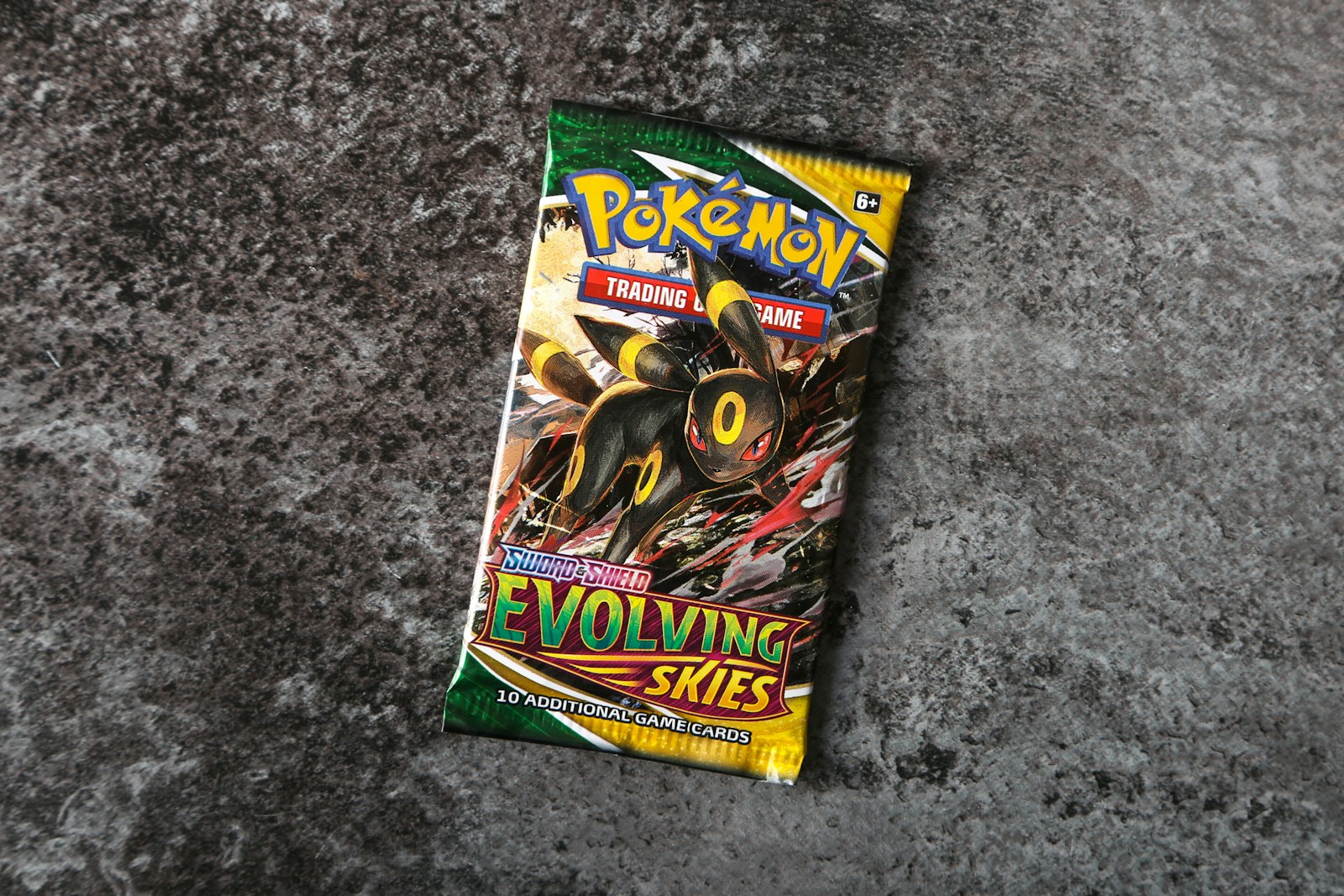
Photo: an English Evolving Skies booster pack, photographed by Giorgio Trovato and used under the Unsplash License. Illustrative packaging, not a current stock offer.
A customer who wants two Pokémon packs is making a different purchase from a customer who wants an unopened booster display. A shop can serve both, but opening the display changes what it has left to sell. The packs may remain factory sealed; the box is no longer an unopened retail unit.
For a reseller, the decision is whether separate pack sales justify giving up the whole-box offer. Start with what your customers buy, then compare the money and work involved in each route. Multiplying a hoped-for pack price by the number of packs is only the start of that comparison.
This guide concerns opening the outer booster display to sell its still-sealed packs. Opening the packs to sell the cards, live breaks and dismantling gift sets are different decisions.
Start with the unit your customer wants
A buyer choosing a few packs may want a smaller purchase or a mix of expansions. Someone looking for an unopened display may care about the complete sealed presentation as well as its contents. These are possible buying reasons, not assumptions to make about everyone who enters a card shop.
Look at the purchases and requests in your own channel. Are buyers repeatedly choosing individual packs of this exact expansion and language? Are they asking for intact displays? Do requests for packs become paid sales at the price you can actually offer?
Pokémon's product guidance confirms that booster packs are sold individually and in full display boxes. That establishes the two formats. It does not tell you which will sell better in your shop.
If most of your relevant buyers want whole boxes, opening several displays to make the shelves look fuller can remove the offer they came for. If buyers reliably choose individual packs, keeping every display sealed can leave suitable stock unavailable in the unit they want.
Identify the exact box before doing the arithmetic
Write down the expansion, language, product name, packaging state and confirmed pack count for the particular display you are considering. Do not carry a familiar packs-per-box figure across languages or product formats. The quotation and actual product must describe the same unit.
For a booster-only display, dividing its total acquisition cost by the confirmed number of saleable packs gives you a starting allocation per pack. It does not establish the price customers will pay, and it does not include every cost of making the sale.
Keep this comparison within the same product. A cardboard display containing loose factory-sealed packs, a sleeved booster and a blister with an additional card are different offers. A price observed for one should not silently become the expected selling price of another.
If the count or source packaging is unclear, resolve it before choosing the route. You cannot compare a whole-box sale with separate pack sales when you have not established what the box contains.
Compare one box sale with the pack sales you can support
Write two short sales plans for the same display.
For the intact-box route, use a selling price supported by relevant transactions or your own sales, then account for acquisition and the costs of that sale. For the pack route, use the number of packs you reasonably expect to sell within your chosen review period, their likely selling prices and the work of completing those purchases. Keep the unsold balance visible.
The difference is not just the total asking price. One box might leave in one transaction. Its packs might leave in a few multi-pack purchases or many separate orders. That changes payment fees, packing materials, fulfilment work and staff time. Use the conditions of your channel; do not assume one order for every pack or one fee structure for every seller.
Consider this hypothetical shop decision. Recent sales support regular purchases of a few packs, but there is no evidence that the entire display will sell during the next week. Opening one display may still make sense. Opening all the remaining displays on the strength of that same evidence commits much more stock to an unproven pace of sales.
The pack route is attractive when its expected additional proceeds justify the additional work and the time needed to recover the purchase money. It is less attractive when the apparent advantage disappears after fulfilment costs, or depends on selling every pack quickly at the highest price you found online.
Give remaining packs a real role in the plan
After part of a display sells, the remaining packs are inventory. Their listing prices are not cash available for the next purchase. Equally, an unfinished display is not automatically a failed purchase: those packs may still fit the shop's regular offer.
Track packs sold, money received after selling costs, remaining quantity and the time taken. Review the remaining packs against the original plan. If purchases continue at workable prices, the display may be doing its job. If stock is barely moving, decide whether the offer, price or buying assumption needs to change before opening another box.
Do not erase the remainder by describing it as free stock once early sales recover the acquisition cost. It still uses space and requires work to sell. Nor should a slower week automatically trigger a discount: first establish whether buyers saw the offer, whether the language and format were clear, and whether the price matched the purchase you were testing.
For the next order, this feedback should change a specific decision: retain more intact boxes, open the next display later, choose a different expansion, or replenish the pack offer that has continued to sell. Our guide to restock versus overstock develops that evidence-based replenishment approach for singles; apply the learning principle without assuming that packs behave like individual cards.
Preserve the description as well as the packaging
Once the outer seal has been opened, describe the remaining product accurately. Individually factory-sealed packs from an opened display should not be presented as an unopened factory-sealed booster box. Keeping the empty display with them does not restore that earlier state.
Keep source records and distinguish separate batches in your working inventory. That makes it easier to answer a question about where a pack came from without inventing assurances about its contents. Do not promise a particular card, a remaining “hit” or a box-wide pull outcome unless an applicable official product statement actually supports that exact claim.
The physical condition also matters. Store and handle individual packs so the buyer receives the packaging you described. If a pack is damaged or its seal is questionable, separate it for assessment rather than quietly including it with unaffected stock.
Open the next display when the next sales justify it
You do not have to choose one permanent model for the entire business. Where your buyers support both offers, keep some displays intact and convert stock to packs as the existing pack inventory sells. The useful split comes from actual purchases and your replenishment conditions, not a universal percentage.
Before ordering more sealed Pokémon products, specify which exact products you intend to sell intact and which would supply individual packs. Confirm the current quotation and product quantities; a larger order does not by itself establish a lower unit cost.
Sell the box sealed when the complete-box offer fits the buyer and the economics. Open it for separate pack sales when that offer has a credible route to customers and you can account for the work and the remainder. The strongest reason to open another display is that you have learned how to sell its packs—not that multiplying their asking prices makes the box look more valuable.
Sources
Disclaimer
Legendary TCG Vault is an independent trading card wholesale supplier. We are not affiliated with Nintendo, Game Freak, Creatures, or The Pokémon Company.