Sourcing
How to Source Pokémon Inventory Without a Distributor
Buy for the business you actually run—not just because a collection looks cheap.
September 7, 2026 · 8 min read
Introduction
You can source Pokémon inventory without a direct distributor account. Local collections, card shows, marketplace purchases and independent suppliers provide alternatives. TCGplayer’s own sourcing guidance discusses several of these routes, including community purchases, store surplus and stock obtained from other sellers. [1]
But finding cards is only the beginning.
A card shop buying a collector’s binder, an online reseller buying a large mixed collection, and a Whatnot seller preparing individual cards for a show may all be purchasing Pokémon inventory. They are not necessarily buying it for the same reason.
One may earn a margin by connecting desirable cards with an established collector base. Another may buy an entire collection, then spend weeks selling it piece by piece. A livestream seller needs cards that make sense to the audience watching right now.
Before asking where to buy, ask a more useful question:
Who will buy these cards from you, and how will that sale happen?
Your sales model should decide what you buy
Think of the following as business models, not permanent labels. A card shop can also sell online or host livestreams. What matters is the route you will actually use to sell this particular purchase.
| Your sales model | What you need the inventory to do |
|---|---|
| Collector-focused card shop | Supply individual cards that your customers actively collect, with condition and pricing you can assess. |
| Online singles reseller | Become accurate listings that can reach buyers searching for specific cards over time. |
| Livestream seller | Give your audience individual cards worth noticing, discussing and bidding on during the show. |
| Wholesaler supplying other sellers | Become useful assortments or repeatable offers that fit your buyers’ own sales channels. |
This article focuses mainly on singles and card collections. If your business sells unopened products or live pack openings, the starting point is different: source the sealed product your customers want. A cheap collection of loose cards does not replace that experience.
For singles, however, the difference between a good purchase and a bad one often begins with what you can do after the cards arrive.
Buying a collector’s binder: your advantage is knowing the next buyer
Consider a binder containing organised, individually identifiable cards.
For a shop with an established collector community, the opportunity is not simply that the cards look better than ordinary bulk. It is that the shop can assess particular cards and connect them with people likely to want them.
Perhaps a regular customer collects Eevee evolutions. Another is building a specific set. Someone else buys higher-condition cards for a graded collection.
The shop has a reason to buy because it already understands the next part of the transaction.
Some cards may be resold ungraded. Others may be candidates for third-party grading. Grading assesses authenticity and condition; services such as PSA also involve submission costs and processing time. [2]
That makes grading a separate buying decision—not an automatic way to increase profit. A card needs enough realistic resale potential to justify the purchase, grading costs and wait, including the possibility of a lower grade than expected.
A dealer or wholesaler can use a similar approach when they have buyers for selected cards or collector-focused lots.
The advantage is not owning a binder. It is being able to judge its contents and place those cards with the right customers.
Without that ability, an attractive collection can still become slow-moving stock.
Buying a mixed collection: the discount pays you to do the work
An online reseller may look at the same market differently.
Suppose, purely as an illustration, that a collection could generate around $1,000 in gross sales if its cards were sold individually. A buyer might consider paying $400 or $500 for the whole collection.
That difference is not automatically profit.
The buyer is taking on the work of identifying cards, checking condition, creating listings, fulfilling orders and waiting for buyers. They are also taking on the risk that some cards sell for less than expected—or do not sell within a useful timeframe.
The original owner receives one payment and avoids that work. The reseller accepts it in exchange for the possibility of earning a margin.
The $1,000 estimate therefore needs to be realistic. Completed-sale evidence is more useful than simply adding up ambitious asking prices; eBay’s Product Research tools use actual marketplace transaction data to help sellers assess products and pricing. [3]
Then the reseller must turn the purchase into saleable listings. For example, TCGplayer requires the correct product version and condition when listing individual products. A mixed collection does not become ready-to-sell inventory merely because it has arrived. [4]
This model can make sense for someone who has the time, systems and customer reach to sell many different cards.
It makes less sense for someone who plans to sell only the most attractive cards and has no route for the remainder.
A collection of unwanted commons and a collection containing a useful range of saleable singles are also different purchases. Calling both “bulk” hides the distinction that matters.
A discount is valuable only when you can do something commercially useful with the stock it buys.
A Whatnot seller needs cards that belong in front of the camera
Now consider a seller who mainly auctions individual cards during livestreams.
Whatnot’s live auctions allow buyers to bid on an item in real time, with the seller setting the starting price and auction timing. The decision happens while the audience is watching the item being presented. [5]
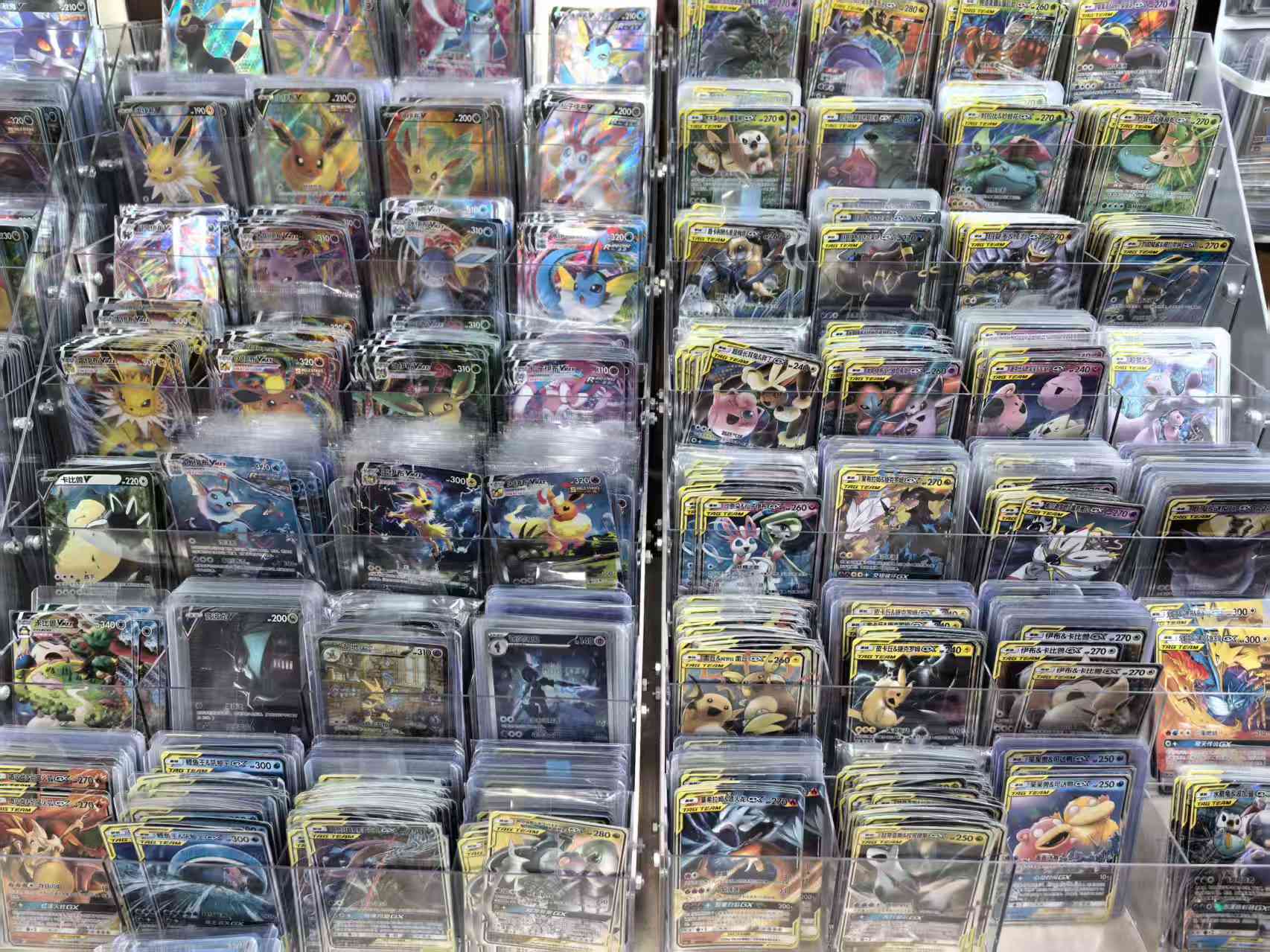
For a character-led show, a card featuring Pikachu, Charizard, Eevee, Gengar or Snorlax can provide an immediate point of connection. A viewer may recognise the Pokémon, like the artwork and decide that this is a card they would enjoy owning.
The host’s explanation, the viewer’s trust and the atmosphere of the show can be part of that moment. The card still needs to fit what the audience is willing to buy.
This gives the seller a different sourcing question:
How much of this lot would I actually want to put in front of my viewers?
Compare two possible purchases.
The first is a large pile of inexpensive cards, most of which have little connection to the audience’s interests. The price per card looks excellent, but the seller struggles to get bids.
The second is a smaller selection built around characters, artwork and price points the audience already responds to. It costs more per card, but more of it has a credible place in the show.
For that seller, the smaller selection may be the more useful purchase.
Recognisable characters are not a guarantee of sales. The exact card, language, condition, acquisition price and audience still matter. A competitive-play or set-completion audience may also want cards that would attract little attention in a character-focused stream.
The point is not that ordinary cards are worthless.
The point is that a card can be saleable somewhere without being saleable through your channel.
An online seller may be able to list it and wait for a specific search. A livestream seller cannot assume that the same buyer will happen to be watching when the card appears.
Judge the whole purchase, not just its best sale
This is where a promising purchase can become a weak business decision.
You buy a collection, find a few appealing cards and sell them at a strong margin. Those sales feel successful. But much of the money spent on the collection may still be tied up in the cards left behind.
The remaining inventory can still have value. It is simply not the same thing as cash you can use to buy the next lot.
A strong individual sale can sometimes recover a substantial part—or even all—of a purchase. But until the overall results support that conclusion, the margin on one card does not tell you how well the whole purchase performed.
Look at what the purchase actually produced: completed sales, money recovered after selling costs, and a realistic route for the stock that remains.
Fast sales at a loss are not the goal. Neither is an impressive potential margin on cards that never leave the storage box.
Useful inventory has a credible route to customers at a price that leaves room for profit.
For a wholesaler, the same question moves one step downstream. Your customer may be another reseller, but you still need to understand how that reseller will sell the cards. An assortment built for a collector-focused shop may not suit a livestream host, even when both want Pokémon singles.
Buying more stock does not solve a missing sales route. It can make the problem larger.
Source stock that fits your customers
Once you understand your sales model, choosing a source becomes easier.
A collector-focused shop can look for individual cards and collections it knows how to assess and resell, through local sellers, card shows or suitable suppliers.
An online reseller with a reliable listing operation can consider mixed collections and lots where the purchase price leaves room for the work, costs and slower-selling remainder.
A livestream seller can focus on selected cards that fit the show’s audience, rather than purchasing ordinary bulk simply because the headline price is low.
A wholesaler needs stock that can become useful, clearly defined offers for other businesses—not just a larger version of the same unsold pile.
This is also where a tailored wholesale order can make sense.
Rather than buying whatever happens to be in a collection, you can discuss a card mix based on the way you sell: collector-focused singles, a broader assortment for online listings, or character-led stock for a livestream audience.
We can discuss custom wholesale card mixes for these different business models. The exact selection depends on the cards available and the requirements we agree on; it is not a promise that any particular card will sell at a particular price.
Tell us how you sell, who your customers are and the kind of cards they respond to. That gives us a useful starting point for discussing an order.
Buy stock with a next customer in mind
You do not need a distributor account before you can start building a Pokémon business.
But you do need to understand what happens after you buy the cards.
A collector’s binder can be useful to a shop with the right buyers. A mixed collection can work for a reseller prepared to list and sell it over time. A selected group of recognisable characters can fit a livestream better than a much larger pile of unrelated stock.
The same cards can be useful inventory for one business and tied-up money for another.
The goal is not to own more Pokémon cards. It is to buy cards your business can sell, recover the money and use it to make the next good purchase.
Sources
Disclaimer
Poke Wholesale is an independent trading card wholesale supplier. We are not affiliated with Nintendo, Game Freak, Creatures, or The Pokémon Company.