Sealed Inventory
Stocking Pokémon Build & Battle Boxes for Events and Retail
A sealed box and a Prerelease seat create different commitments. Learn how to count boxes and prize packs separately before placing a retail or event order.
November 8, 2026 · 5 min read
Introduction
A Pokémon Build & Battle Box can sit on a shelf with a price tag or be set aside for someone who has reserved a Prerelease seat. The box may look the same in both cases. What the customer pays for is different. A retail shopper takes home a sealed product. An event player expects a place to play, the materials to build a deck, and any participation packs the shop advertised.
Before accepting a supplier quote, decide how many boxes have a job on the event floor and how many you can justify as retail stock. A box allocated to a paid seat is already spoken for.
Check the unit on the supplier quote
Ask whether the quote covers individual sealed Build & Battle Boxes, a display of those boxes, or an organizer’s Prerelease Kit. The Play! Pokémon event guidelines give each player one Build & Battle Box and distinguish the separate booster display used for prize support. A quote for standalone boxes does not tell you that you have those extra packs. Use the same unit-by-unit check when you confirm sealed stock before shipping.
The distinction is visible on a real event listing. For its October 27, 2026 Delta Reign event, Legacy Game Store described a 40-card deck and four packs used to build and play, plus three bonus packs for completing all three rounds. Those bonus packs were part of that store’s event offer. If you buy sealed boxes to resell, check the exact expansion and regional product before describing what the customer will find inside.
Work out the number of seats you can actually sell
For an eligible organizer, a seat commits one box as well as table space, staff time and any advertised participation prize. Confirm what the current program and your supplier have approved before you put a seat on sale. The Prerelease program overview explains that eligible Leagues order through their selected reseller during an ordering window and then sanction and report the event. Check the program instructions for the set you are ordering.
Suppose a shop has 16 confirmed boxes and room for 16 players, but only 36 packs earmarked for a session that promises three extra packs per player. With that offer, the packs cover 12 seats. The remaining four seats need another 12 eligible prize packs assigned before the shop can advertise them on the same terms. The quantities in this example are a planning exercise. The supplier’s actual kit configuration and event guidance determine what stock can be used.
Keep unallocated shelf stock, event boxes and participation packs as separate counts. If a player cancels, reconcile the reservation with your published terms first. Check the program and release conditions before moving any leftover event stock into a retail listing. The Early Release Program has its own eligibility conditions, including approval for the current set’s Prerelease and reserved kits. For example, Pokémon’s Delta Reign announcement gave different dates for the start of participating-store events and the expansion’s November 6, 2026 release. Check the date for the exact item and selling route before taking orders.
Put the difference where the customer pays
Play! Pokémon recommends three extra booster packs for participants who complete the event and asks shops to make separate purchases clear in online listings when applicable. Stores can publish different offers. Relentless Dragon advertised three additional packs at the end of its Delta Reign event. Hobby Addicts advertised two. A player describing two Prereleases compared them partly by the packs that came with participation. The concern is real even though one account cannot tell you how often it occurs.
Put the set, session time, box and participation terms next to the event price. If you also list the sealed box, show its verified contents and make the purchase type clear at checkout. A customer looking for a quick game at home can choose the product without reserving a seat. A player comparing events can see exactly what their reservation covers.
Decide whether the retail order still makes sense
A full event gives you a count of seats sold under a specific offer. It gives little information about how many people would buy an unopened box for home play or a collection. Keep an event tally and a retail tally for the next buying decision. Where the confirmed seats exceed the stock you can allocate, check whether you can get enough boxes and prize support to run a second session. Where attendance is strong but the retail boxes remain on the shelf, buy for the next event and keep the separate retail order modest.
For a retail-only shop, make the buying decision on the sealed box buyers can actually purchase. Confirm the unit and the permitted sale date, and buy against that offer. A Prerelease seat belongs in the inventory plan only when the shop has the program access, product and people to deliver it.
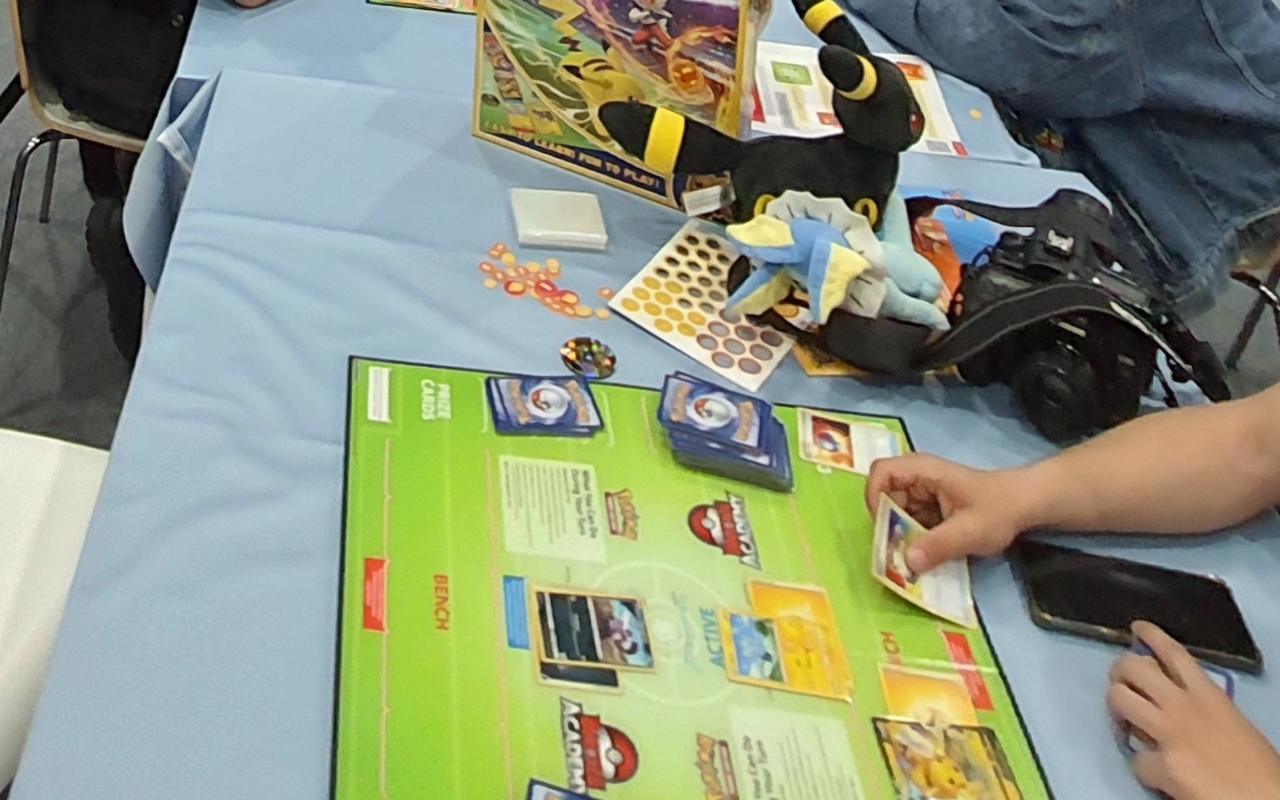
Photo: Pokémon TCG play table at Pyrkon 2022 by Klapi, cropped for this article and shared under CC BY-SA 4.0. The photograph shows a Battle Academy play table.

Sources
Disclaimer
Poke Wholesale is an independent trading card wholesale supplier. We are not affiliated with Nintendo, Game Freak, Creatures, or The Pokémon Company.