Singles Selection
Stocking Pokémon Cards for Artist Collectors: Ask What Counts
An illustrator can connect cards across Pokémon and sets. Ask what fills the customer’s collection before turning that connection into a stock purchase.
November 1, 2026 · 7 min read
Introduction
A customer asks for Pokémon cards by Yuka Morii. Your shop has a box of inexpensive singles, but sorting every card with a clay-style image into a bundle is not yet an answer. Which cards does that customer already own? Do they want one example of each artwork, a particular language, or every printing they have chosen to collect?
For a card shop or online singles reseller, an artist collection creates a different way to select stock. The connection runs across Pokémon and expansions rather than following one character or one set. It can make an overlooked card relevant to a particular customer. It does not make every card by that illustrator equally wanted, or turn a mixed assortment into a guaranteed sale.
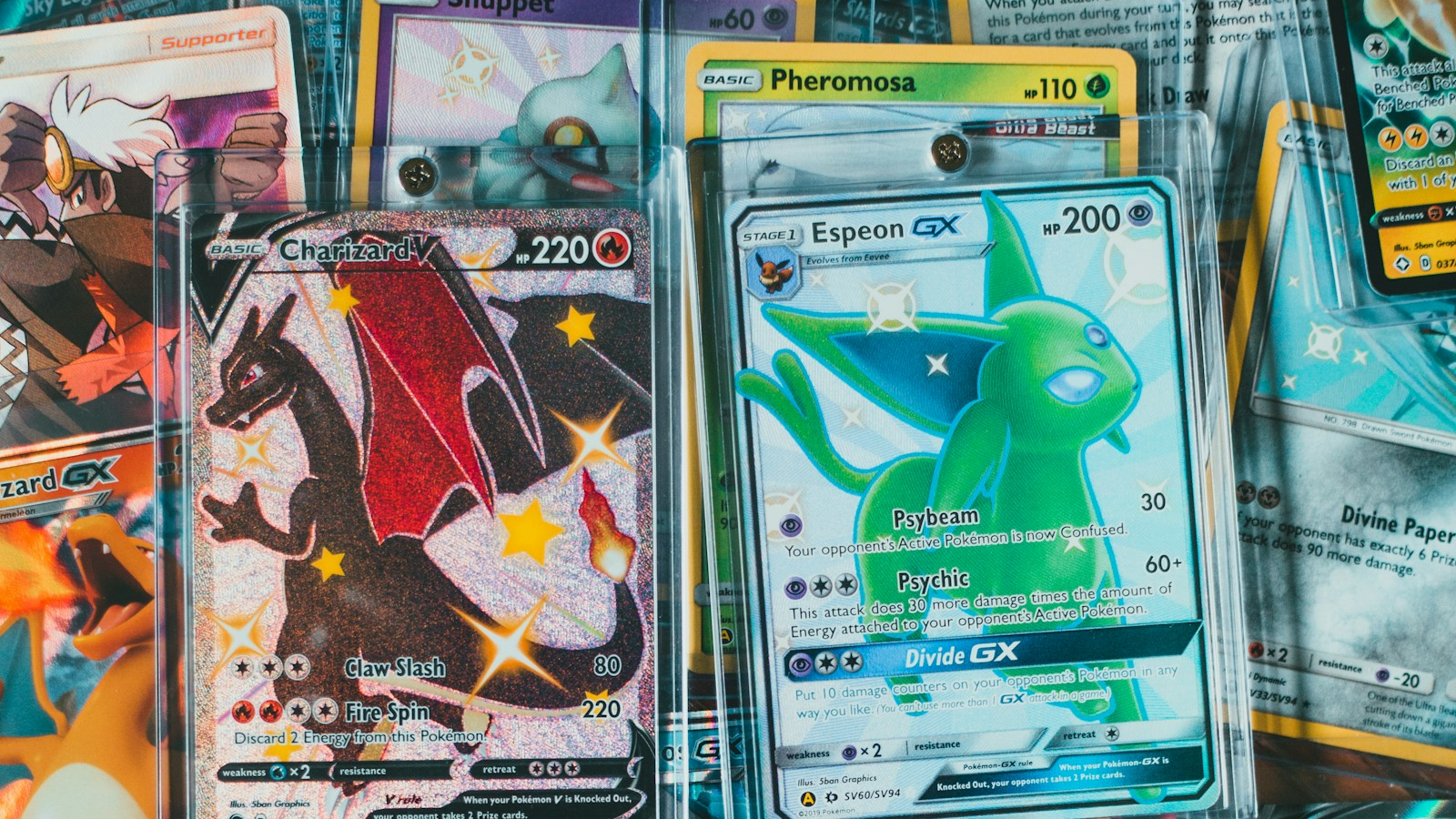
Date checked: November 2, 2026 (UTC). The examples concern physical cards. The photograph shows a varied card selection, not a complete collection by one illustrator or a current stock offer. The selection and inventory steps below are editorial recommendations, not a claim about every collector or a new Poke Wholesale service.
Start with the illustrator, not a visual guess
Confirm the name in the card's illustrator credit. Record the card name, expansion, collector number, language and relevant printing alongside it. A similar style is a reason to investigate, not a reliable substitute for a credit.
Pokémon's Scarlet & Violet—151 art feature, published September 29, 2023, illustrates the distinction. It credits Yuka Morii for the modeling-clay Magnemite and Magneton images and discusses Tomokazu Komiya's Gastly, Haunter and Gengar artwork. Those examples help a customer recognize an illustrator's work; they are not a complete catalogue of either artist's cards.
Use an actual card or a clear reference image to confirm what the buyer means. A customer may remember the scene without knowing the illustrator's name. Another may name the artist but want only a particular period or style. Establishing that boundary is more useful than immediately quoting for every matching credit in a supplier's lot.
Find out what fills a pocket
In a collector discussion showing several artist collections, participants describe collecting different illustrators and enjoying how their work looks together across sets. The useful signal is the collecting method. These individual accounts do not establish how many such buyers your shop has or how much they will pay.
Ask the customer to show a few cards they want and a few they would skip. Then establish the collecting rule. Does a second printing with the same picture add something they want? Is a different language acceptable? Would they choose a regular or reverse-holo copy, or specifically collect both? Are oversized cards and promotional issues part of this collection?
These are questions, not assumed preferences. Someone collecting images may regard two printings as interchangeable; someone documenting editions may want both. Neither customer's rule should be imposed on the other. A supplier offering several versions of one picture might provide useful choice without providing several different gaps to fill.
In a discussion about overlapping artist and species binders, one collector explicitly did not want to buy duplicates merely to fill both displays. That is a useful counterexample to assuming each collecting category creates another unit of demand. It remains one person's preference.
Write the agreed scope beside the customer's list. For example, an explicitly hypothetical request might be one English copy of each chosen artwork, with no need for alternate finishes. That instruction would change which duplicates you buy. It is not evidence that English or single-artwork collecting is the market norm.
Show the selection before buying more stock
Create a reference view of the relevant cards, with enough identification for the customer to distinguish similar images and printings. A physical reference binder or a digital image list can help. Label what is available separately from what is shown only for reference; a complete-looking display must not imply complete stock.
This follows the same customer-discovery principle as our set-completion singles guide, but the organizing rule differs. A set collector follows an expansion and its versions. An artist collector can cross many expansions while deliberately excluding some printings. Do not copy a set checklist and call it a complete artist collection without checking that scope.
Compare the reference with what the customer owns. Offer the identified matches you actually have. If a buyer wants six different images and your stock supplies three, show those three and identify the remaining gaps. Adding unrelated cards or extra copies does not fill another requested pocket.
A request can justify further research. It is not automatically a commitment to purchase every matching card you find. Confirm the specific offer and terms before treating interest as an order.
Use an artist view without counting stock twice
You do not necessarily need to move every relevant single into a separate physical stock box. An illustrator tag in an existing catalogue can create another way to find the same item while retaining its normal location and identity.
Keep one inventory count for each saleable copy. A card shown in an artist selection and a set-completion selection is still one card. When it sells, both views need to reflect that change. The artist category is a way to find stock, not an extra unit of stock.
When considering a supplier's assortment, compare its actual contents with the gaps you intend to serve. Separate different desired artworks, alternate printings, unwanted duplicates and cards outside the agreed scope. If the lot cannot be divided, evaluate the remaining cards as part of that same purchase; do not assume the artist label gives them all an outlet.
Condition remains a separate requirement. An art-focused buyer may still reject a crease, a surface mark or a worn edge. Confirm the actual standard rather than treating an inexpensive binder card as a card whose condition does not matter. Our Near Mint guide explains why different buyers can require different copies even under the same raw condition label.
Let requests guide the next purchase
Record which identified cards customers requested, which they bought, and which they declined. Keep the reasons when a customer provides them: already owned, wrong language, unwanted finish, condition or simply not an image they want. A compliment about a display is useful feedback, but it is different from a paid sale.
Look at what remains, too. Selling one attractive card from an artist assortment does not establish demand for repeated copies of the rest. Before buying the same mix again, compare the unresolved requests with the leftover stock and the work required to offer it clearly.
The practical opportunity is to help customers find cards through a collecting rule that your existing catalogue may hide. Start with the credited illustrator, agree what counts for that buyer, and source the identified gaps. An artist's name can organize the conversation; the customer's actual selection should organize the purchase.
Sources
Disclaimer
Poke Wholesale is an independent trading card wholesale supplier. We are not affiliated with Nintendo, Game Freak, Creatures, or The Pokémon Company.