Wholesale Buying Guide
Pokémon Set-Completion Singles: Stock the Missing Cards
Help collectors find missing Pokémon cards with a complete set reference, then manage broad singles stock, days of supply and excess inventory.
October 11, 2026 · 10 min read
Introduction
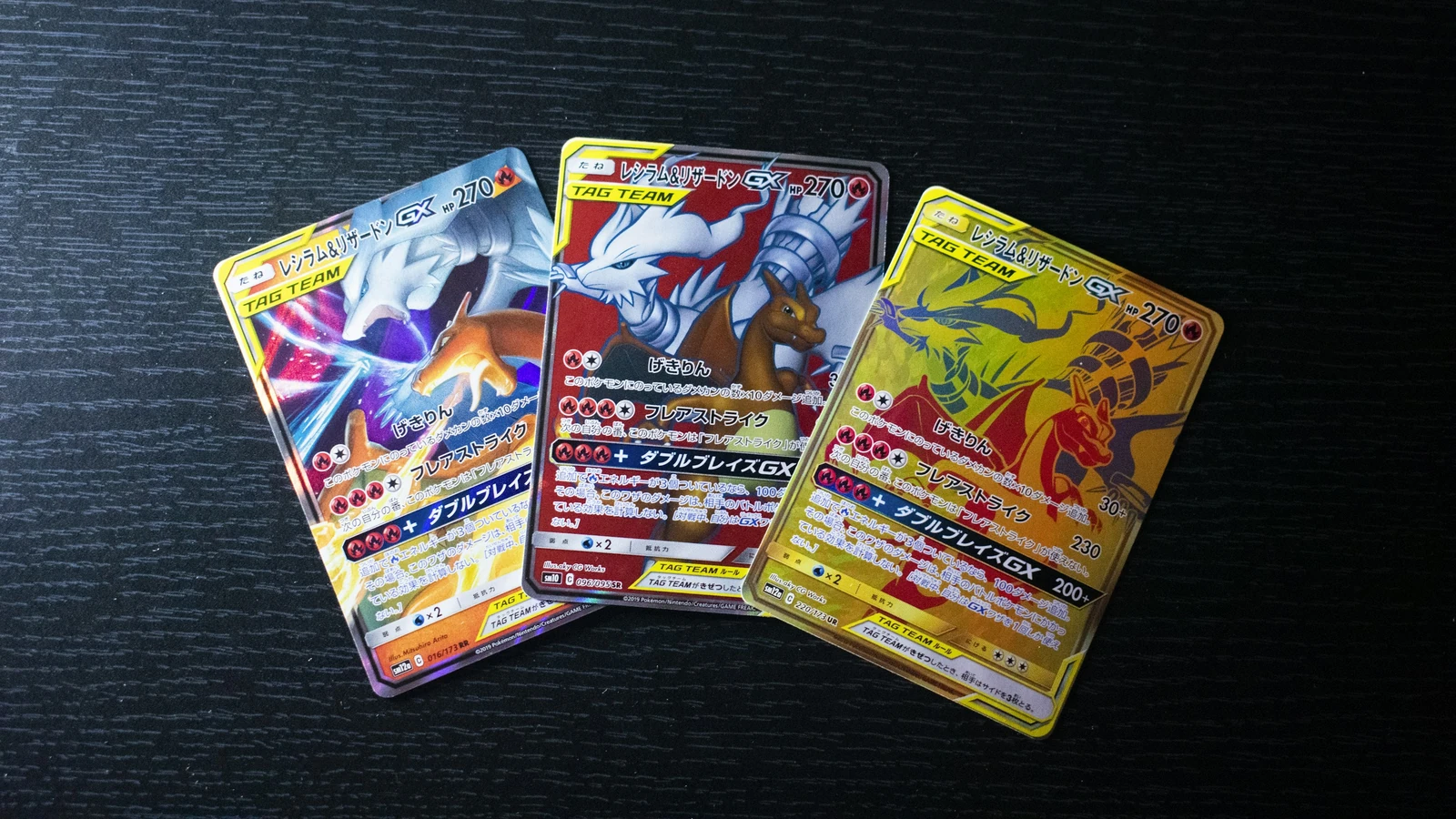
Photo: different Japanese Pokémon card versions, photographed by Halfcut Pokemon and used under the Unsplash License. An illustration of version selection, not a complete set or current stock offer.
A collector who is missing six cards from a Pokémon set is shopping for those six gaps. A box of several hundred mixed cards may contain none of them. For a shop buying singles to serve set collectors, the useful inventory question is therefore not just how many cards a supplier offers, but which missing cards that stock can help customers find.
Selling Pokémon set-completion singles starts before a customer hands you a missing-card list. Help them see the complete series, identify their gaps and choose what they want to buy. Then give those choices a place in your inventory: a broad range of useful versions, shallow stock of less popular cards and enough copies of proven sellers to cover a sensible selling period.
Show the complete series so customers can find their gaps
A customer may know that a binder is unfinished without knowing exactly which cards are missing. Give them a physical reference binder or a digital card album covering the complete series they are collecting, arranged by card number and with the relevant versions clearly identified. Compare that reference with their collection and mark what they own, what they lack and what they want to buy now.
The reference should cover the series, not just today's stock. A shop can use a digital album or a labelled reference index for cards it does not physically hold; it need not purchase every expensive card simply to explain the collection. Keep the full-series reference and the available-for-sale list distinct, so a displayed card is not mistaken for an in-stock offer.
Check the reference against a source for the correct expansion and language. For example, Pokémon's official English XY checklist lists numbered cards and distinguishes standard, foil and parallel-set entries. It is a checklist to help verify that specific set, not a picture album or proof that every promotional variant belongs in a customer's chosen collection. Pair the appropriate checklist with a clear visual reference for the cards you are discussing.
Turn the comparison into an agreed list: expansion, language, card number, finish and acceptable condition. If the request says “master set,” clarify the contents rather than assuming the phrase defines a purchase on its own.
In an Elite Fourum discussion about finishing a set, one collector specifically needed reverse-holo common and uncommon cards. Others described combining openings with individual purchases or trades. The useful signal for a seller is the specificity of the gap: a regular copy already in the binder does not resolve a request for its reverse-holo counterpart. The discussion illustrates individual collecting choices, not the size of the market for any particular card.
Use that distinction when taking an order. “One of each card on this agreed list” is a more checkable offer than “everything you need.” If the buyer also wants promotional or other variant cards, list those separately and confirm the exact versions. Do not assume a checklist for one language or release transfers unchanged to another.
A customer's photograph of an empty binder pocket can start the conversation, but it should end with an agreed identity. Otherwise, you may source the right Pokémon and still send the wrong card.
Offer missing singles and starter selections differently
A buyer beginning a set and a buyer nearly finishing it can need different things from the same stock.
For a beginner who wants a defined starting selection, an accurately listed group of different cards may be useful. State which cards and finishes are included, whether there are duplicates, and what is excluded. A selection containing only common and uncommon cards should not be presented as a complete expansion.
For the collector with a short missing list, offer the exact available matches. Suppose, as an illustrative example, a customer requests eight specific reverse holos and your stock contains five. Show the five you can supply and identify the three you cannot. Replacing the missing cards with unrelated extras increases the parcel count without completing another pocket.
That also explains why one offer should not silently substitute for the other. Someone who already owns most of a set may have little use for a starter selection containing many duplicates. Someone just beginning may prefer a transparent selection to choosing every ordinary card individually. Ask which purchase they want before assembling it.
Keep a broad selection without buying every card deeply
A singles shop needs different cards and versions, or SKUs, because customers have different gaps. Waiting for a paid order before stocking every version can leave the reference album showing plenty of choice but little to buy. Separate inventory breadth—the different cards and versions offered—from inventory depth, the number of copies of each one.
For less popular cards kept to round out that selection, our owner's practical starting recommendation is about two or three saleable copies per SKU. The purpose is to make a useful card available without tying up money in a large stack. This is an operating guideline for that role in a singles shop, not a measured industry optimum or a reason to buy every card regardless of cost and customers.
Use customer requests to choose relevant coverage, and actual sales to decide which SKUs deserve more copies. A supplier's mixed lot becomes potential completion stock only after you know its sets, languages, card identities, finishes and condition. Many copies of a few common cards are different from a broad selection of missing versions.
Ask whether a card list or a defined selection is available, and what the actual terms are. If you must buy the whole lot, estimate its usefulness from representative inspection rather than photographs of a few attractive cards. Do not count every unseen card as another distinct gap you can fill.
Consider a shop with repeated requests for a particular expansion. A well-sorted selection from that expansion may fit its next orders better than a larger assortment spanning releases its customers have not requested. This is a conditional buying example, not evidence that narrow stock always sells faster. A business serving several active collecting groups may need broader coverage.
Price the alternatives as they are actually offered. Selecting particular cards may change the quote, and a larger order does not automatically bring a lower unit price. Nor should you assume it will cost more. Confirm availability, quantity and terms for the exact selection before comparing it with the mixed lot.
Make ordinary singles easy to find and order
The customer needs to know whether you have the missing card; you need to be able to retrieve the same version after accepting the order. Organise saleable stock by an identification method you can maintain, such as language, expansion, number and finish, with quantities and condition notes attached.
At a shop counter, a searchable list or clearly sorted section can support a collector arriving with a checklist. For online sales, make the included versions and available quantities visible before payment. If you offer a combined order, confirm the requested list and what you can actually fill before promising dispatch.
Keep condition part of the offer even for inexpensive cards. A customer filling a tidy binder may reject a creased copy. Our guide to buying mixed-condition Pokémon cards for resale explains how those requirements should shape the stock you acquire.
Sorting, identifying and picking cards is real work. The price of an order must leave room for that work and fulfilment, not just the acquisition cost of the paper. If a particular request takes disproportionate sourcing effort, quote that request honestly or explain that you cannot supply it. Do not promise an unrestricted completion service merely because you have bulk inventory.
Respect the collector who still wants to open packs
A completion offer does not replace every reason to collect. In a first-person account on GamesRadar+, a collector described enjoying ordinary Pokémon discoveries while building a Pokédex binder and deliberately keeping it a gradual project. That is a useful counterexample to the assumption that every empty pocket is an immediate singles order.
Ask whether the customer wants to fill the gap now. Someone preserving the enjoyment of finding cards through openings may decline an available single; another collector may be ready to finish a specific section. You can serve either preference without presenting one as the correct way to enjoy the hobby.
For purchasing, the distinction matters. An interesting conversation about a missing card is a lead to understand, not a confirmed sale. Record specific requests separately from completed orders, then use both with their proper weight when deciding what to replenish.
Replenish regular sellers by days of available stock
For a card that sells regularly, calculate how long the saleable quantity should last at its recent selling rate. Use sales of the same version and comparable condition through your own channels. Requests and views help explain interest, but they are not completed sales.
As an illustrative calculation, suppose you sold 30 copies over the past 30 days: the recent average is one card per day. If you have 30 saleable, unreserved copies after replenishment, that is about 30 days of stock at the same pace. With 60 copies, it is about 60 days. If 10 copies remain and you buy another 30, the total is 40 copies—about 40 days, not 30.
Our owner's recommendation is to judge whether roughly 30 days is enough or whether 60 days better fits the shop's replenishment needs, and generally avoid holding more than 90 days for this kind of regular-selling SKU. These are experience-based planning suggestions. The choice should reflect how soon replacement stock can arrive, the cash involved and whether the recent sales pattern is likely to continue.
Calculate the new order from the target total, not by automatically buying the target number again. Start with the unreserved saleable stock already on hand, then account for uncommitted inbound copies expected in time. In the one-per-day example, if the target is 30 copies, 10 are available and another five are already inbound, the additional order would be 15 copies, assuming no sales before arrival. For a longer wait, also allow for the sales you reasonably expect before replenishment reaches you. Reserved copies are already excluded from available stock; do not deduct the same reservation twice or count an inbound order again as stock on hand.
Check whether the sales period was representative. A single unusual order can inflate the average, while days spent out of stock can hide demand. A slow card with no recent sales does not produce a useful days-of-stock estimate. Keep those cards under the small-quantity coverage decision instead of forcing every SKU into the same replenishment calculation. Our duplicate-card restocking guide explains why repeated demand matters before buying deeper.
Give excess stock an exit
Two or three copies kept to offer a less popular version have a different job from a large pile that exceeds the shop's likely sales. Review both quantity and role before clearing stock: removing every slow SKU can weaken the choice that makes a completion service useful.
For genuine excess or long-standing unsold quantities, choose an exit rather than repeatedly carrying them forward at an estimated retail value. Offer an accurately described lot at a wholesale price to another dealer whose customers may need it, or run a lower-priced clearance through your own channels. State the versions, condition and duplicates so the next merchant can judge the stock and leave room for their own selling work.
Compare the cash a realistic exit can recover with the costs and work still required. Wholesale or clearance sales may involve a loss; recovered cash is not automatically profit, and another dealer may decline the lot. The purpose is to release money and space from surplus while retaining the small quantities that still serve the shop's range.
A useful set-completion offer starts with a complete reference that helps customers discover their gaps. Stock a broad choice in sensible quantities, replenish regular sellers against days of available stock, and give genuine excess a route out. That connects the collector's missing pocket to a purchase the shop can supply—and to an inventory decision it can repeat.
Sources
Disclaimer
Poke Wholesale is an independent trading card wholesale supplier. We are not affiliated with Nintendo, Game Freak, Creatures, or The Pokémon Company.